
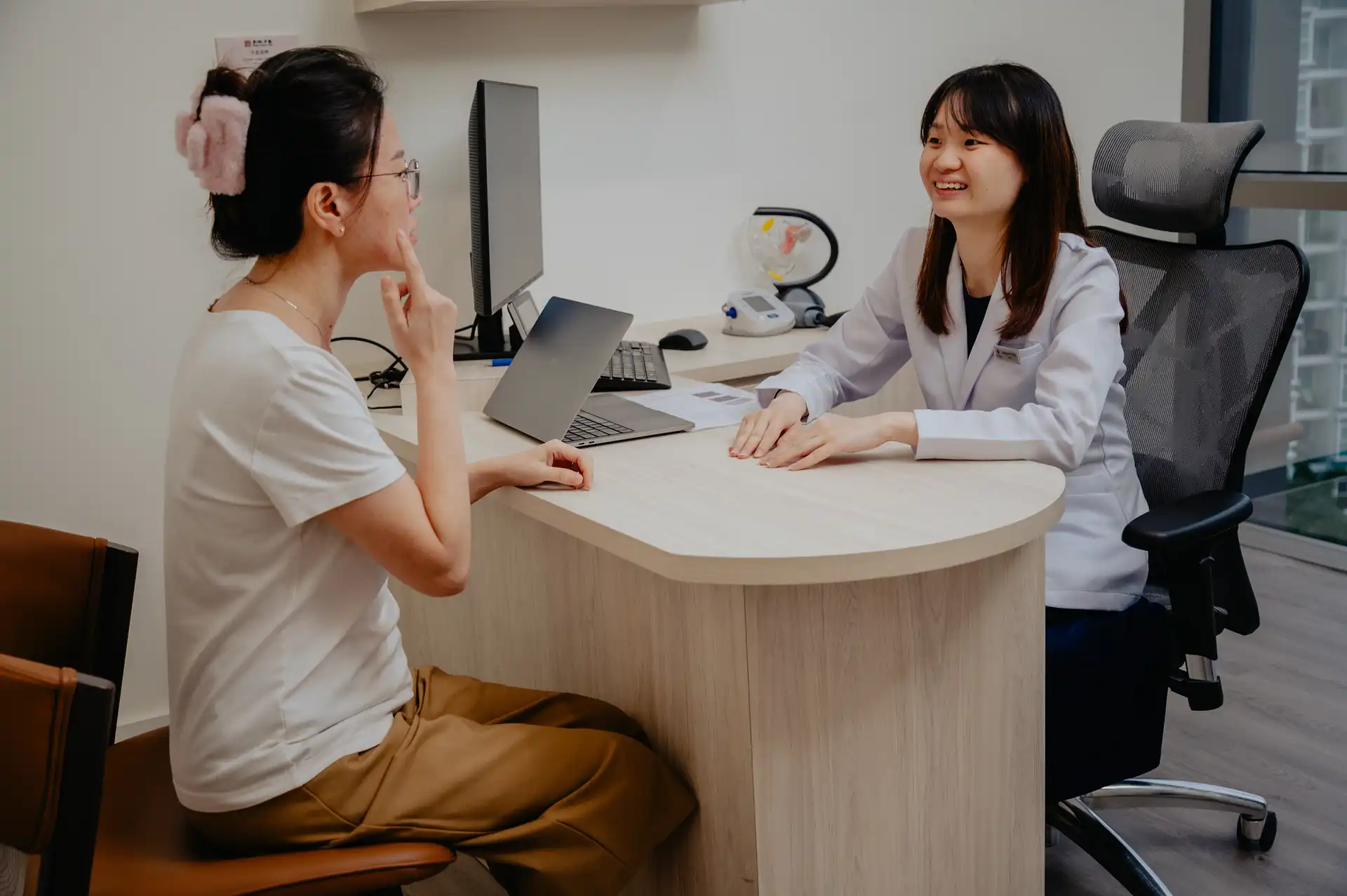
In Singapore, women in their late 30s and 40s often find themselves in the sandwich generation, juggling high-pressure careers while caring for young children and ageing parents. When fatigue sets in or your period arrives late, it is easy to assume it is just the pace of life. However, if your body feels fundamentally different, you might be experiencing the onset of perimenopause symptoms.
What is Perimenopause? (The Transition Phase)
Perimenopause is the natural transition leading up to menopause, a phase can last anywhere from a 4—10 years. During this time, your ovaries begin to produce oestrogen inconsistently, disrupting the rhythmic hormonal cycles you have known for decades. In Singapore, many women begin noticing perimenopause symptoms as early as their late 30s or early 40s.
Perimenopause vs. Early Menopause: Knowing the Difference
It is vital to understand where you sit on the biological timeline, as the terminology depends heavily on age. Early menopause refers specifically to the final cessation of periods occurring between the ages of 40 and 45. If periods stop entirely before the age of 40, it is medically classified as Premature Ovarian Insufficiency (POI). While both involve the end of menstruation, natural perimenopause is a much longer, non-linear process that typically starts in your 40s and leads toward the average Singaporean menopause age of 49.
The Hormonal Rollercoaster
If you feel like your body and moods are unpredictable, it is likely due to the hormonal rollercoaster of perimenopause. During this stage, your oestrogen and progesterone levels do not simply drop in a straight line; they fluctuate wildly. One month oestrogen may be exceptionally high, while the next it plummets. These sharp spikes and dips are responsible for why you might feel fine one day and completely overwhelmed the next. This erratic hormonal activity is the root cause behind common disruptions like brain fog, breast tenderness, and sudden irritability.
Common Perimenopause Symptoms: Or is it Just Stress?
Stress and hormonal shifts often share a similar symptom profile, making it difficult to identify the root cause. Here, we examine the overlap and the specific physical markers that point toward perimenopause.
The Overlap: When Stress Mimics Hormonal Shifts
In Singapore’s high-pressure environment, stress and perimenopause often mimic each other through persistent fatigue, irritability, and insomnia. This is driven by the Cortisol Connection: chronic stress triggers high cortisol levels that disrupt the Hypothalamic-Pituitary-Ovarian (HPO) axis. This interference can cause irregular or missed periods, effectively masking or emulating the onset of perimenopause.
Distinguishing Physical Signs
While stress can affect your cycle, certain vasomotor symptoms are more classic indicators of perimenopause. Identifying these can help you determine if your symptoms are hormonal:
- Hot Flashes: Sudden waves of heat through the chest, neck, and face, often followed by a chill.
- Night Sweats: Intense hot flashes that occur during sleep, often requiring a change of clothes.
- Irregular Menstrual Cycle: A hallmark of perimenopause where the time between periods shortens or lengthens, often skipping months entirely as ovulation becomes unpredictable.
- Significant Flow Changes: Periods that become unusually heavy (soaking through products every hour) or noticeably lighter and shorter.
- Sleep Disorders: Increasing difficulty falling asleep (insomnia) or becoming a light sleeper who wakes frequently, often due to a drop in progesterone, which has a natural sedative effect.
- Hormonal Headaches: A surge or dip in oestrogen can trigger new or worsening migraines and tension-type headaches, particularly right before a period begins.
- Mood Swings: Sudden shifts in irritability, anxiety, or low mood that feel disproportionate to daily stressors, driven by the brain’s reaction to fluctuating hormone levels.
TCM Perspective on Perimenopause
Traditional Chinese Medicine views perimenopause not as a deficiency to be cured, but as an energetic transition. By addressing the root imbalances, TCM helps women navigate this stage with grace.
The Decline of Kidney Essence (Jing)
In TCM, perimenopause is viewed as the natural decline of Kidney Essence (Jing), manifesting as either Yin or Yang deficiency. This transition is often aggravated by Singapore’s fast-paced lifestyle, which causes Liver Qi Stagnation. When stress prevents energy from flowing smoothly, it creates internal heat, intensifying symptoms like irritability and breast tenderness.
Balancing Yin and Yang
Many perimenopause symptoms are the result of Heat Deficiency. As Kidney Yin (the body’s cooling, nourishing fluid) declines, the body’s Yang (heat) becomes relatively excessive. This is why women experience night sweats and menopause rage. TCM focus revolves around nourishing the blood and cooling this internal heat to stabilise the mind and body, ensuring a smoother transition into what is traditionally called your Second Spring.
TCM Treatments for Perimenopause at Wo.men Matters
At Wo.men Matters, we provide non-invasive, natural therapies tailored to your unique body constitution to help manage the transition effectively.
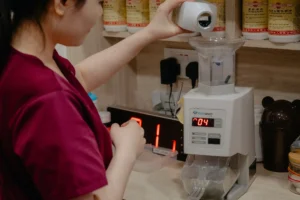
Baliao Massage (八髎穴) & Herbal Paste: Rejuvenating Ovarian Health
For a deeply restorative experience, we combine specialised sacral massage with the application of a potent herbal paste. This dual therapy is designed to support the root of women’s health.
- Baliao Massage (八髎穴): Located on the sacrum, these eight points are vital for regulating the pelvic cavity. Massaging this area helps to relax the nervous system and de-stress the body while significantly improving blood circulation to the uterus and ovaries.
- External Herbal Paste (外敷): Following the massage, a customised herbal paste is applied to the lower back or abdomen. The warmth of the paste allows botanical essence to penetrate deeply, nourishing the ovaries and supporting hormonal production.
- The Benefits: This combination is particularly effective for women experiencing a cold uterus, irregular cycles, or the fatigue and stagnation often associated with perimenopause. It works to warm the palace and revitalise ovarian function naturally.
Acupuncture for Hormonal Harmony
Acupuncture involves the gentle insertion of fine needles at specific meridian points to regulate the nervous system and support the endocrine system. For perimenopause, we focus on points that help:
- Regulate Menstrual Cycle: By nourishing the Blood and strengthening the Kidney Qi, acupuncture helps to stabilise the timing of your period and manage flow consistency during the transition.
- Heal Headaches: By clearing Wind-Heat or resolving Stagnation, acupuncture effectively reduces the frequency and intensity of hormonal migraines and tension headaches.
- Improve Sleep Quality: By calming the spirit and reducing nighttime anxiety.
- Reduce Hot Flashes: Regulating body temperature and cooling internal heat.
- Balance Mood: Smoothing the flow of Liver Qi to reduce feelings of irritability.
TCM Formulas
Chinese herbal medicine provides a gentle way to restore internal balance without synthetic hormones. Formulations are customised to your specific needs, such as nourishing Kidney Yin to reduce dryness or soothing the Liver to manage mood swings and sleep disorder. These natural herbs work to balance the body and support overall wellness during the transition.
Holistic Lifestyle & Dietary Therapy
Your diet is a powerful tool for managing symptoms. We guide you on incorporating foods based on your constitution:
- Cooling Foods: For those with “Deficiency Heat” (e.g., black beans, tofu, and certain green vegetables) to help manage hot flashes.
- Warming Foods: For those with Yang deficiency who feel cold easily (e.g., ginger or cinnamon).
- Avoiding Triggers: Reducing caffeine, alcohol, and spicy foods which can trigger sudden hot flashes.
When to Seek Help for Perimenopause
While perimenopause is a natural phase, you do not have to endure disruptive symptoms in silence.
Identifying Red Flag Symptoms
You should consult a professional if you experience symptoms that disrupt your daily life or red flag signs such as:
- Periods that occur more often than every 21 days.
- Extremely heavy bleeding (soaking through a pad/tampon every 1 to 2 hours).
- Spotting between periods or bleeding after intimacy.
The Importance of a Personalised Assessment
Because no two women experience perimenopause the same way, a one-size fits all approach rarely works. A skilled TCM physician is able to identify your specific pattern of imbalance. This ensures that your treatment plan is unique to your body’s needs, helping you reclaim your comfort and rhythm.
FAQs About Perimenopause Symptoms
Can perimenopause start at 35?
Yes, it is possible. While most women start in their 40s, early perimenopause can begin in the mid-30s, especially if there is a family history or due to certain lifestyle factors.
Will TCM interfere with my other supplements?
TCM treatments like Ba Liao Massage are non-invasive and generally safe to use alongside other wellness practices. If you are taking herbal medicine, it is best to inform your physician so they can ensure your regime is well-integrated.
How many sessions are needed to see results?
Many women report significant improvements in headache, sleep and mood within 1 to 3 sessions.
Why Choose Wo.men Matters
At Wo.men Matters, we focus in women’s health, providing a sanctuary for those navigating the complexities of hormonal shifts. Our licensed practitioners understand the unique pressures of life in Singapore and offer a holistic, patient-centric approach to perimenopause. We focus on treating the root cause, not just the symptoms, to help you transition with confidence.
Ready to find balance? Book a consultation with Wo.men Matters today to begin your journey toward natural relief.