

Waking up feeling nauseous can quickly overshadow the joy of early pregnancy. If morning sickness is leaving you exhausted, Traditional Chinese Medicine offers natural, gentle ways to manage these symptoms and support your changing body.
Morning sickness is a common pregnancy symptom involving varying degrees of nausea and vomiting. From a medical standpoint, it is linked to rising hormone levels. In Traditional Chinese Medicine, we view it as a temporary imbalance of energy or Qi. By using supportive therapies like acupuncture, Traditional Chinese Medicine, and dietary adjustments, expectant mothers can safely manage morning sickness and restore harmony to their digestive system.
What Is Morning Sickness? Timing, Peaks, and What Is Normal
Understanding the timeline of pregnancy nausea helps set realistic expectations. Most women experience morning sickness between weeks 4 and 12, with symptoms peaking around weeks 8 to 10 before gradually subsiding.

When does morning sickness typically begin?
For the majority of women, morning sickness begins between weeks 6 and 8 of pregnancy. However, human bodies are wonderfully diverse. Some mothers report feeling nauseous as early as week 4 of their pregnancy. It is entirely possible to feel early shifts in your digestion.
In TCM philosophy, the timing and severity of symptoms depend heavily on your unique constitution. Setting realistic expectations without alarmism is key to navigating the first trimester.
Which week is typically the worst, and does it differ for everyone?
Medical professionals generally observe that weeks 8 to 10 are the most intense, aligning with peak hormone levels. You might also notice that night-time nausea is quite common. Physiologically, fatigue plays a role.
In TCM, we understand that rising energy is harder to contain when the body is at rest, and Spleen Qi naturally weakens in the evening.
Why does morning sickness usually ease around 12 weeks?
Conventional medicine explains that around 12 weeks, the placenta takes over hormone production, allowing hCG levels to stabilise. From a TCM perspective, the intense upward energetic activity of the body begins to moderate as the pregnancy stabilises, allowing your system to adapt.
What Causes Morning Sickness? A TCM Perspective
Traditional Chinese Medicine views pregnancy nausea not just as a hormonal shift but as a disruption in the body’s energy flow. The sudden upward movement of Qi, along with existing digestive weaknesses, creates the perfect environment for nausea.
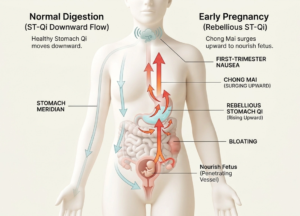
Rebellious Stomach Qi: the TCM root understanding
In TCM, healthy digestion relies on energy flowing downward. During early pregnancy, the Chong Mai vessel (often translated as the Penetrating Vessel) surges upward to nourish the foetus, causing digestive energy to rebel and rise. This rebellious Stomach Qi is the primary cause of first-trimester nausea and bloating.
How Liver Qi and Spleen-Stomach weakness can make symptoms worse
Your constitution significantly influences early pregnancy symptoms. Liver Qi stagnation from stress can disrupt the Stomach, while a Spleen deficiency weakens the body’s ability to direct digestive energy downward. This deficiency is common in those with poor digestion or chronic fatigue. At Wo.men Matters, we identify these unique patterns to provide targeted care for morning sickness.
Does morning sickness indicate a lower risk of miscarriage?
Many mothers find reassurance in morning sickness, as some studies and TCM principles link these symptoms to a robust pregnancy environment. However, a lack of symptoms is not a cause for alarm. Because constitutions vary, some women simply adapt to pregnancy with less digestive disruption. Please consult your gynaecologist regarding any clinical concerns.
TCM Treatments for Morning Sickness at Wo.men Matters
Professional TCM treatments offer a complementary approach to managing pregnancy nausea safely. Our licensed TCM physicians utilise gentle acupuncture, Traditional Chinese Medicine to help harmonise your digestive system.

Acupuncture during pregnancy
Acupuncture is a recognised therapy that helps calm the nervous system and reduce nausea signals. By stimulating specific acupoints, practitioners help balance your digestive energy and support your body through early pregnancy. We typically recommend one to two sessions weekly from weeks 6 to 12. All Wo.men Matters practitioners are fully registered and experienced in safe pregnancy care.

Traditional Chinese Medicine
Traditional Chinese Medicine is tailored to your specific needs. Wo.men Matters provides modern, convenient formats like pill, powder and syrups, so there is no need to boil raw herbs. Safety is our priority, and all prescriptions must be managed by a licensed professional to ensure the wellbeing of both mother and baby. Always consult a registered TCM physician before starting any herbal remedy during pregnancy.
When to Seek Help: Red Flags and Warning Signs to Know
While morning sickness is common, severe symptoms require immediate medical attention. Knowing the difference between typical nausea and serious complications ensures the safety of both mother and baby.
Signs that morning sickness may need medical attention
It is crucial to know your physical limits. You should seek immediate help from a gynaecologist if you experience the following:
- Inability to keep down any food or fluid for 24 hours
- Signs of dehydration, such as dark urine, dizziness, or a rapid heartbeat
- Unintended, rapid weight loss
- Vomiting blood TCM is a wonderful complementary support, but it is not a substitute for emergency or primary obstetric care. Always direct clinical concerns to your gynaecologist.
What is hyperemesis gravidarum and can TCM help?
Hyperemesis gravidarum (HG) is a severe form of pregnancy nausea affecting a small percentage of women. It requires close medical management to prevent dehydration and malnutrition. While many find acupuncture very helpful for reducing nausea, it is still important to stay under the care of a gynaecologist. HG is a serious condition that goes beyond standard morning sickness and requires professional intervention.
Should I worry if my morning sickness suddenly stops before 12 weeks?
Fluctuating symptoms are a common source of anxiety, but a temporary easing often just reflects your body adapting. However, if symptoms disappear suddenly and completely, especially alongside cramping or spotting, contact your gynaecologist immediately. We recommend consulting your obstetric care team for peace of mind.
Begin Your Journey Towards Balance
If you are struggling with morning sickness, or planning for a healthy pregnancy, professional guidance can make all the difference.
At Wo.men Matters, our experienced TCM physicians combine traditional wisdom with modern understanding to help expectant mothers achieve natural relief and digestive harmony.
Book a consultation today to start your journey with us towards a more comfortable and supported pregnancy experience.