
Published on: 17 August 2026
Have you recently received a low AMH test result? An AMH test measures a specific hormone to estimate your remaining egg supply, and a low result reflects egg quantity, not egg quality. Many women in Singapore with low AMH still conceive, whether naturally or through fertility treatment, once their overall reproductive environment is understood and supported.
Key Takeaways
- An AMH test estimates your ovarian reserve but does not measure egg quality or your ability to conceive naturally.
- Women with low AMH can still become pregnant naturally or through assisted reproductive treatments, depending on several factors, including age and egg quality.
- AMH levels naturally decline with age and should always be interpreted together with other fertility assessments such as Antral Follicle Count (AFC) and Follicle Stimulating Hormone (FSH).
- No medical or TCM treatment can create new eggs or permanently increase ovarian reserve. Instead, fertility care focuses on supporting the healthiest possible environment for your remaining eggs.
- Because eggs mature over approximately 90 days, lifestyle changes and TCM support are most beneficial when started several months before trying to conceive or beginning IVF treatment.
What is an AMH Test?
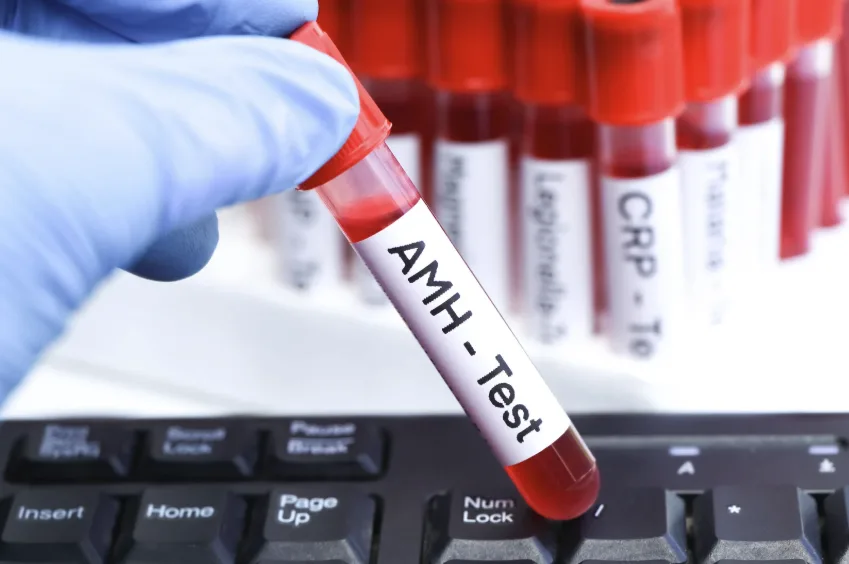
An Anti-Müllerian Hormone (AMH) test is a simple blood test used to estimate a woman’s fertility potential and ovarian response to fertility drugs. Fertility specialists throughout Singapore commonly recommend this test when evaluating fertility, planning pregnancy, considering egg freezing, or preparing for IVF treatment.
What Does the Anti-Müllerian Hormone Measure?
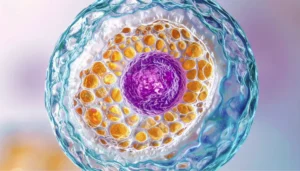
An AMH test measures the levels of Anti-Müllerian Hormone, a protein secreted by the granulosa cells within the ovarian follicles. AMH measurement is a reliable method of predicting the likely response of the ovaries to fertility drugs, indicating the estimated number of growing follicles. However, it is important to note that an AMH test only assesses the number of growing follicles; it does not measure egg quality, genetic viability, or guarantee natural conception, which relies on the health of an individual egg.
This distinction is important because many women mistakenly believe that a low AMH result means pregnancy is impossible. In reality, conception depends on many factors, including egg quality, sperm quality, uterine health, and timing of ovulation.
Understanding Normal AMH Levels by Age
AMH levels naturally decline as a woman ages. To understand AMH test results, a patient’s specific levels are evaluated alongside standard clinical benchmarks established for their age group.
Here is a general reference table for typical AMH levels:
- Under 30 years old: Optimal reserve (typically above 2.5 ng/mL).
- 30 to 35 years old: Normal age-related reserve (1.5 to 4.0 ng/mL).
- 35 to 40 years old: Noticeable drop in reserve (1.0 to 2.5 ng/mL).
- Over 40 years old: Low reserve (typically under 1.0 ng/mL).
A low AMH Test reading tends to imply a lower fertility potential. It is important to note that certain factors, such as severe vitamin D deficiency or recent use of oral contraceptives, might temporarily lower your AMH Test results.
Who Should Consider an AMH Test?
An AMH blood test may be recommended if you are planning a pregnancy or want a better understanding of your fertility potential. While it is commonly associated with infertility investigations, it is equally valuable for women who simply want to make informed family planning decisions.
Why Doctors Recommend the Test
Doctors in Singapore often recommend an AMH Test to help plan family-building strategies. This blood test provides valuable baseline data for your reproductive timeline.
Doctors typically suggest an AMH Test for the following reasons:
- Assessing the realistic timeline for natural conception.
- Evaluating the feasibility of social egg freezing.
- Planning for assisted reproductive technologies like IVF or IUI.
- Investigating underlying reasons for irregular menstrual cycles.
By assessing your current AMH level, you and your healthcare provider can tailor a fertility treatment that suits your specific biological needs. Knowing your numbers allows for proactive steps, whether you plan to conceive now or in the future.
How TCM Can Support a Low Ovarian Reserve
Now that you know what your AMH result actually measures, here’s what you need to know. While women are born with a finite number of eggs, certain clinical research has shown that both Traditional Chinese Medicine and Western supplements have the potential to improve AMH levels for ladies with low AMH. By working to improve local blood circulation, reducing systemic inflammation, and providing nutrients, TCM treatments aim to nourish existing follicles and support the growth of the eggs.
The 90-Day Egg Quality Window
In reproductive biology, the follicular maturation cycle spans roughly 90 days. This means an egg ovulated today actually began its final stage of development about three months prior. This timeline provides a strategic window for supportive care. Undergoing a structured TCM programme during this three-month phase aims to support the follicular environment. By incorporating consistent TCM treatment like Baliao therapy and Traditional Chinese Medicine supplementation in the months leading up to natural conception or an IVF egg retrieval, patients can help nourish developing follicles during a key growth phase, focusing on supporting overall egg quality.
Integrating Western Care with TCM
An integrative approach brings together the best of both worlds. You can use the AMH Test from a Western clinic to obtain a clear, objective measurement of your current fertility potential. Then, you bring those insights to a TCM physician to craft a holistic care plan. This collaborative method ensures that your treatment is well-rounded. While Western medicine tracks your progress and handles medical procedures like IVF, TCM works quietly in the background. It helps to prepare your body, manage emotional stress, and optimise your reproductive organs. This combined strategy empowers you to tackle a low AMH Test result with confidence and clarity.
TCM Perspective on Low AMH
Traditional Chinese Medicine views a low AMH diagnosis as a reflection of systemic imbalances, typically associated with a decline in vital essence (Jing) and compromised blood circulation to the reproductive organs. By identifying these classical patterns of disharmony, TCM therapies aim to improve pelvic blood flow and support systemic health to nourish the remaining follicles.
Kidney Jing and Ovarian Health
In TCM philosophy, reproductive vitality is governed by Kidney Essence, which is also known as Jing. You can think of Jing as your foundational reproductive bank account. A low AMH Test result often correlates directly with a depletion of Kidney Jing. When Kidney energy is low, the ovaries lack the deep, foundational warmth and nourishment needed to mature healthy follicles. Patients might also experience symptoms like cold hands, lower back ache, or fatigue. Restoring this essence is a primary focus for women experiencing a diminished ovarian reserve. Traditional Chinese Medicine supplementation and targeted acupuncture help rebuild this vital energy over time.
Spleen Qi and Nutrient Absorption
The Spleen is responsible for digestion and transforming the food you eat into vital energy (Qi) and Blood. When Spleen Qi is deficient, compromised nutrient absorption can limit the supply of nourished blood to the reproductive organs, potentially affecting follicle development and the lining of the uterus. Supporting Spleen function through tailored dietary adjustments and Traditional Chinese Medicine supplementation helps provide the essential resources needed for reproductive health. For patients experiencing cycle disruptions alongside these digestive imbalances, addressing these underlying deficiencies is also a core focus when managing irregular periods with TCM treatment.
Liver Qi and Stress Imbalances
The Liver ensures the smooth flow of energy and blood throughout the entire body. Chronic stress, anxiety over fertility challenges, and poor sleep can easily cause Liver Qi to stagnate. This stagnation restricts blood flow to the pelvic cavity and disrupts the delicate hormonal balance required for regular ovulation. A stagnant Liver often presents as irregular periods, severe menstrual cramps, or intense mood swings. By soothing the Liver, TCM helps manage stress hormones like cortisol. This creates a much more relaxed and hospitable internal environment, paving the way for healthier ovulation and a smoother conception journey.
Modern TCM for Ovarian Health
Our protocol for supporting ovarian health centres on four non-invasive therapies, adapted for the pace of modern life in Singapore. For patients who prefer to avoid needles altogether, our needleless meridian therapy (Baliao therapy) stimulates the eight sacral points on the lower back to improve local blood circulation and regulate the autonomic nervous system supplying the ovaries and uterus. For those comfortable with needles, fertility acupuncture in Singapore increases blood circulation directly to the ovaries and uterus, delivering oxygen and nutrients to developing eggs while calming the nervous system.
Alongside these, we prescribe modern, non-boil TCM herbal formulations, easy-to-consume pills, powders, and syrups tailored to your specific constitution, whether you need to nourish depleted Kidney Jing or invigorate stagnant blood. Rounding out the protocol, our womb care therapy uses a warm herbal paste and gentle penetrating heat to dispel cold from the uterus and promote a richer, more vascularised endometrial lining.

Scientific Evidence: Can TCM and Acupuncture Support Low AMH and IVF?
Review the growing body of clinical research that highlights how acupuncture and Traditional Chinese Medicine supplementation can enhance fertility outcomes for ladies with low AMH.
Better Live Birth Rates
Recent clinical studies highlight the positive impact of integrative fertility care. Research suggests that women with a low AMH who incorporate Chinese herbal medicine into their IVF cycles often experience improved outcomes. A large cohort study of over 10,000 IVF patients in China looked specifically at women with poor ovarian response, including those with an AMH under 1.2 ng/mL and a low antral follicle count, and found that those who received TCM treatment (Chinese herbal medicine, acupuncture, or both) had a significantly higher cumulative live birth rate than those who didn’t, even after accounting for age, ovarian reserve, and other clinical factors. The benefit held across most patient groups, though it wasn’t statistically significant for the group with the most severely diminished reserve, a reminder that TCM support works best when started early rather than as a late-stage fix. By preparing the body for months before an embryo transfer, these holistic therapies help create a more stable internal environment. While an AMH Test provides the baseline data, combining TCM with medical interventions helps maximise the potential of every single egg retrieved during a fertility cycle.
Regulating FSH and AFC Levels
A 2023 systematic review published in Frontiers in Endocrinology indicates that consistent acupuncture can positively influence key reproductive hormones. For instance, regular treatments have been shown to help lower elevated baseline Follicle Stimulating Hormone (FSH) levels and modulate Luteinizing Hormone (LH) ratios. Furthermore, by improving local pelvic blood flow, these treatments can help support the robust growth of existing follicles. Clinical trials have demonstrated that this supportive care results in a statistically significant increase in Antral Follicle Count (AFC) during transvaginal ultrasound scans for women diagnosed with diminished ovarian reserves. Optimising these vital hormonal markers is especially beneficial for women trying to navigate the complexities of a low AMH Test result alongside their primary fertility physician.
TCM Support for IVF Success
Navigating an IVF cycle is physically and emotionally demanding. TCM acts as a complementary therapy throughout the entire process. Starting Traditional Chinese Medicine supplementation and needleless meridian therapy (Baliao therapy) at least 90 days before starting stimulation medications can help manage side effects like bloating and mood swings. Furthermore, receiving acupuncture before and after an embryo transfer helps relax the uterine muscles. As detailed in medical reviews on acupuncture mechanisms during IVF cycles, this targeted relaxation helps lower uterine contractility to prevent the early expulsion of embryos, thereby supporting overall IVF success.
Frequently Asked Questions
Does a low AMH level mean I cannot get pregnant naturally?
No. AMH measures the number of growing follicles, not their genetic quality. Since natural conception only requires one high-quality egg, many women with low AMH can conceive naturally when their body’s overall reproductive environment and hormonal balance are well-supported.
How do AMH test results affect my IVF or egg freezing plans?
A low AMH result suggests that the ovaries may respond modestly to hormone injections, which could result in a lower yield during egg retrieval. When quantity may be limited, working with a TCM specialist to focus on egg quality becomes an invaluable step.
How much do TCM fertility programs cost in Singapore?
Pricing depends on the specific treatment and physician. Acupuncture (ART) + Moxibustion starts at $141.70, and needleless meridian therapy (baliao therapy) + Herbal Paste (External) starts at $185.30 per session; see our price list for full current rates.
Why Choose Wo.men Matters for TCM
At Wo.men Matters, we blend classical wisdom with a deep understanding of modern reproductive science. We know that receiving a low AMH Test result is stressful and confusing. Our experienced physicians provide a safe, nurturing environment where your concerns are truly heard. We tailor every single treatment plan using gentle acupuncture, modern TCM formulations, and comforting needleless meridian therapy (Baliao therapy) to support your unique fertility journey.
Your path to motherhood is deeply personal, and you deserve comprehensive support every step of the way. If you are ready to explore how Traditional Chinese Medicine can optimise your reproductive health, we are here to help. Bring your AMH results to your consultation. Our physicians review your hormone levels alongside your menstrual history, fertility goals, and overall health before recommending a personalised TCM treatment plan that complements your medical care.