

Published on: 16 September 2026
Ovarian cysts are a common finding in women of reproductive age. While most cysts are benign functional structures that resolve naturally without affecting fertility, specific types, such as endometriomas or large complex cysts, may require medical evaluation and structured care. A balanced approach focuses on accurate clinical diagnosis, monitoring, and supporting overall pelvic and reproductive health. Integrating Traditional Chinese Medicine (TCM) alongside standard medical guidance can help support pelvic circulation and complement your general fertility wellness.
Key Takeaways
- Most ovarian cysts are benign and resolve independently without affecting fertility or requiring intervention.
- Functional cysts rarely impact pregnancy; complex cysts and endometriomas may require monitoring or treatment.
- Cysts can affect fertility by impairing ovulation, reducing egg quality, or causing pelvic inflammation. All of these effects are addressable through integrated care.
- Early detection through symptoms awareness and imaging is key to fertility preservation.
- TCM therapies including acupuncture, Ba Liao therapy, and customised herbal medicine support pelvic health and reduce cyst-related inflammation.
What Are Ovarian Cysts?
An ovarian cyst is a fluid-filled sac that develops within or on the surface of an ovary. Despite sounding concerning, cysts are common in reproductive-aged women and often asymptomatic. Your body naturally produces follicles each month during your menstrual cycle; most reabsorb, but occasionally fluid accumulates and persists, forming what’s called a functional cyst.
Importantly, a cyst diagnosis doesn’t mean you cannot conceive. The majority of cysts are non-cancerous (benign) and often resolve on their own or simply require routine observation. Knowing the specific type of cyst helps you work closely with your doctor to plan the best path forward for your reproductive health.
Types of Ovarian Cysts
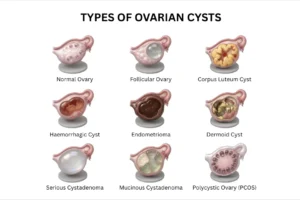
Ovarian cysts develop as fluid-filled sacs on or inside an ovary, falling into two main categories: functional cysts related to your monthly menstrual cycle and non-functional cysts caused by abnormal cell growth. While most functional cysts resolve on their own without affecting your fertility, non-functional types may require closer monitoring or medical treatment.
Functional Cysts
Functional cysts, including folicular, corpus luteum, and haemorrhagic cysts, are byproducts of normal ovulation. They are typically under 3 cm, appear clear on an ultrasound, and resolve naturally within 6 to 8 weeks. These cysts rarely interfere with your fertility or require medical intervention.
Non-Functional and Complex Cysts
Non-functional cysts form independently of your ovulation cycle and do not resolve on their own. On an ultrasound, these are often identified as complex cysts because they contain internal debris, thick fluid, or solid tissue rather than clear fluid. They include:
- Endometriomas (“Chocolate Cysts”): Formed when endometrial-like tissue grows on the ovary, a hallmark of endometriosis. Unlike functional cysts, endometriomas can impair egg quality and ovarian reserve through localised inflammation and reduced pelvic blood flow. Women with endometriomas often benefit from proactive management before attempting conception.
- Dermoid Cysts (Teratomas): Benign growths that form from embryonic cells present since birth, which can contain skin, hair, or fat tissue.
- Cystadenomas: Non-cancerous tumours that develop on the outer surface of the ovary, filled with a watery or mucous fluid, which can occasionally grow quite large and cause localised discomfort.
PCOS vs. Ovarian Cysts
Polycystic ovary syndrome (PCOS), now formally known as Polyendocrine Metabolic Ovarian Syndrome (PMOS), falls into a completely different clinical category. Although characterised on ultrasound by multiple small, underdeveloped follicles (often referred to as a “string of pearls”), PCOS is fundamentally an endocrine disorder causing hormonal imbalances that affect regular ovulation, rather than a condition of discrete, isolated ovarian cysts.
Common Symptoms and the Importance of Early Detection
Most small ovarian cysts cause no symptoms and are discovered during routine pelvic ultrasounds. However, as cysts grow or persist, they can cause subtle physical signals:
- Pelvic Pain or Dull Ache: A persistent, heavy ache or sharp pain on one side of your lower abdomen, which may intensify around your period or during intercourse.
- Abdominal Bloating and Fullness: Unexplained swelling, tightness, or a constant feeling of fullness in your lower stomach.
- Changes in Urination or Bowel Habits: Pressure from a larger cyst on nearby organs, leading to a frequent urge to urinate or difficulty emptying your bowels completely.
- Menstrual Irregularities: Unexpected spotting, unusually heavy periods, or lighter-than-normal bleeding.
When to Seek Immediate Medical Care
Sudden, severe pelvic pain accompanied by nausea, vomiting, or fever can indicate a ruptured cyst or ovarian torsion (twisting of the ovary). These require urgent medical attention.
The TCM Perspective on Ovarian Cysts
In Traditional Chinese Medicine, an ovarian cyst is rarely viewed as an isolated issue. Instead, it is seen as a sign of broader systemic imbalances in your pelvic health, such as Phlegm-Dampness from sluggish fluid circulation, Blood Stasis from restricted pelvic blood flow, or Kidney Deficiency affecting overall ovarian responsiveness. Rather than just focusing on the physical cyst itself, TCM addresses the underlying internal environment that allowed it to develop. By improving systemic circulation and clearing pelvic congestion, treatment helps restore your body’s natural balance and reproductive health.
Integrative TCM Treatments for Ovarian Cysts
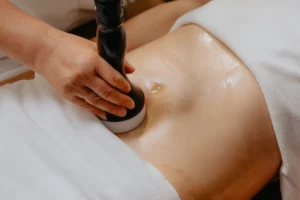
Our integrated care plans combine targeted therapies to ease cyst-related inflammation, boost pelvic circulation, and support your fertility goals. Every treatment plan is carefully tailored to your unique body constitution and diagnosis.
To support this process from within, Customised Traditional Chinese Medicine herbal preparations available in modern powders, pills, or syrups are prescribed to resolve fluid retention, dispel blood stagnation, or nourish foundational essence based on your specific needs. Additionally, modalities such as gentle moxibustion apply therapeutic heat and warm herbal pastes to the lower abdomen, dispelling internal coldness, relaxing pelvic tension, and encouraging a receptive environment for conception. Where suitable, Baliao Therapy may also be recommended depending on the nature of any ovarian cysts present.
Frequently Asked Questions
Can getting pregnant help with ovarian cysts?
Pregnancy may help functional cysts resolve due to hormonal changes, but it’s not a treatment strategy. Complex cysts or endometriomas require evaluation before conception planning.
Can you carry a baby with a cyst on your ovaries?
Yes, most women with cysts carry healthy pregnancies safely. Your specialist monitors cyst progression throughout pregnancy.
What activities should I avoid if I have large cysts?
Avoid high-impact exercise and heavy lifting. Gentle movement (walking, swimming, yoga) is generally safe; consult your doctor.
What shrinks ovarian cysts naturally?
Most functional cysts resolve within 6–8 weeks independently. Anti-inflammatory diet, stress management, and gentle movement support resolution; TCM therapies accelerate this.
How can I get pregnant with ovarian cysts naturally?
Many women conceive naturally with cysts present. Timing intercourse around ovulation and maintaining pelvic health through TCM support optimise chances.
Should I have surgery before trying to conceive?
Surgery is reserved for large, complex, or symptomatic cysts. Most simple functional cysts don’t require intervention; your specialist advises based on your diagnosis.
Why Choose Wo.men Matters for TCM
At Wo.men Matters, we focus on gentle, evidence-informed TCM support for ovarian cysts and fertility. We combine classical wisdom with modern diagnostic clarity to create personalised plans addressing cyst-related inflammation and restoring pelvic health.
Understanding how your body responds to a recent cyst diagnosis or fertility preparation is an important step. Personalised TCM guidance can help you move forward with clarity and confidence.