
Published on: 16 September 2026
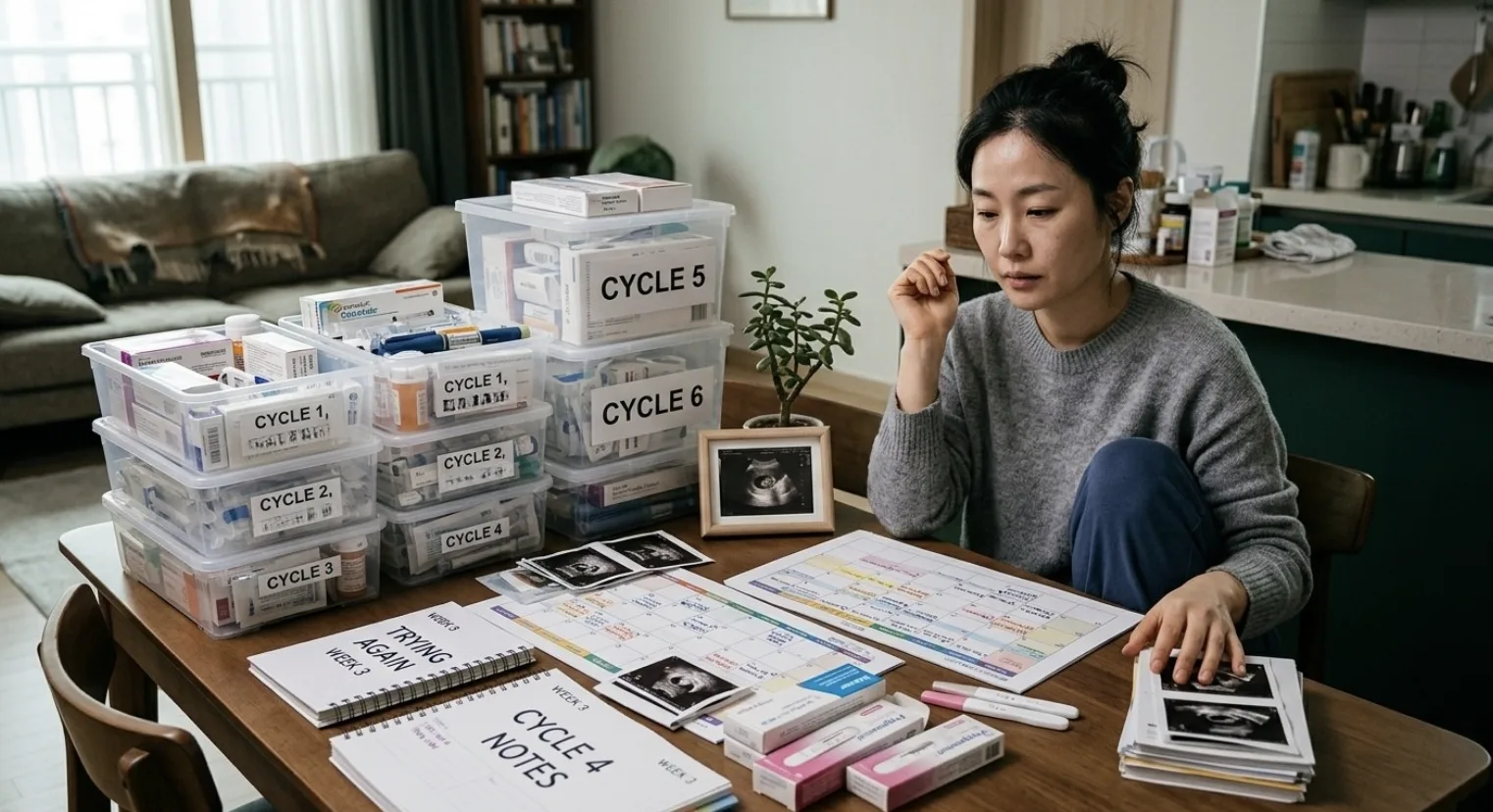
On average, it takes 2 to 3 IVF cycles to achieve a successful pregnancy, with cumulative live birth rates rising steadily across sequential attempts. Success depends heavily on maternal age, ovarian reserve, embryo quality, and sperm health. Integrating supportive Traditional Chinese Medicine (TCM) therapies 90 days days before starting IVF stimulation cycle can optimise pelvic circulation and to prepare the uterine environment naturally.
Preparing for fertility treatment brings hope and practical questions. While western medicine focuses on the numbers and medical protocols, TCM focuses on preparing your soil before planting the seed. Understanding how many IVF cycles it typically takes helps you set realistic expectations, manage stress, and give your body the best possible foundation to support a successful pregnancy.
Average IVF Cycles Needed to Achieve Pregnancy
While some couples succeed on their first attempt, official Singapore Ministry of Health (MOH) assisted reproduction guidelines and landmark research published in JAMA show that most women require 2 to 3 IVF cycles to achieve a live birth. Because cumulative success rates rise steadily across successive rounds, local fertility centres tend to recommend preparing physically and financially for 2 to 3 complete cycles rather than expecting success from a single attempt.
Single-Cycle vs. Cumulative Success Rates
Single-cycle metrics track the success of a single embryo transfer. Conversely, cumulative rates calculate the total probability of achieving a live birth across multiple sequential transfers, including frozen embryo transfers (FET) derived from a single egg retrieval cycle.
| Maternal Age Band | Average Live Birth Rate (Single Cycle) | Cumulative Live Birth Rate (3 Cycles) |
|---|---|---|
| Under 30 years old | ~26.6% | ~65% to 70% |
| 30 to 34 years old | ~24.6% | ~55% to 60% |
| 35 to 39 years old | ~17.1% | ~40% to 45% |
| 40 years old and above | ~6.7% | ~15% to 20% |
Data adapted from Ministry of Health (MOH) Singapore assisted reproduction statistics.
How Age, Health, and Male Factors Impact Your Required Cycle Count
Key biological parameters across both partners dictate overall embryo viability and the total number of stimulation rounds required for pregnancy. Maternal age remains the primary biological factor determining cycle requirements. As women mature, ovarian reserve naturally declines, and the proportion of eggs with chromosomal abnormalities rises. Women under 35 usually require fewer attempts because a higher percentage of retrieved eggs yield genetically balanced embryos, whereas women aged 37 or older may require extra stimulation rounds to secure viable blastocysts.
Alongside age, ovarian reserve directly influences cycle planning. An Anti-Mullerian Hormone (AMH) test measures the number of follicles that are growing rather than cellular quality. A lower AMH level indicates a fewer follicles are growing, meaning fewer follicles mature per stimulation round. Patients with reduced AMH may undergo multiple egg retrievals, a practice known as embryo pooling, before proceeding to an embryo transfer. For a detailed breakdown of test interpretations, explore our guide on interpreting low AMH test results.
Finally, male factors contribute to nearly half of all conception challenges. While a standard semen analysis measures general sperm count, three key sperm health markers play a critical role in overall cycle success:
- Sperm DNA Damage (DNA Fragmentation): Measures how intact the genetic material inside the sperm is. Elevated DNA damage can cause early developmental arrest, leading to implantation failure or early loss regardless of maternal age.
- Sperm Maturity and Binding Capacity (HBA Test): Evaluates the percentage of mature sperm capable of binding to hyaluronic acid, assessing acrosome integrity and overall functional capability required to adhere to and fertilise the egg, backed by clinical research on hyaluronan-binding assay effectiveness.
- Sperm Swimming Ability (Progressive Motility): Checks how efficiently the sperm can swim forward through seminal fluid to reach the egg.
Which Cycle of IVF More Successful?
Without adequate preparation, IVF is often a cumulative process where each round provides critical biological insights to optimise future outcomes. Understanding how success rates evolve across multiple attempts helps set realistic expectations, from utilising initial rounds as diagnostic benchmarks to recognising when protocol adjustments or recovery breaks are needed.
Why the First IVF Cycle Often Serves as a Diagnostic Step
An unsuccessful first attempt rarely signals permanent failure. Reproductive specialists frequently view cycle one as an invaluable diagnostic window. It exposes how your ovaries respond to stimulation hormones, reveals hidden egg or sperm quality issues, and demonstrates embryo development patterns. Fertility specialists use these crucial insights to refine medication protocols, adjust dosage levels, and alter transfer strategies for subsequent attempts. You can read more about evaluating underlying causes in our overview on navigating IVF failure in Singapore.
Why Second and Third Cycles Often Show Improved Outcomes
A medical study published in Human Reproduction shows that second and third attempts frequently yield higher success rates than the first cycle. This progress stems from targeted protocol refinements based on initial outcomes. Specialists can introduce advanced diagnostic screenings, switch from fresh to frozen embryo transfers, or adjust stimulation hormone dosages to enhance endometrial readiness.
Knowing When to Pause: How Many Rounds of IVF Is Too Many?
Pursuing multiple IVF attempts places physical, financial, and emotional demands on couples. In Singapore, while doctors can proceed with treatment if you remain medically suitable, government co-funding is capped at 3 fresh and 3 frozen cycles. If an IVF cycle fails, patients should evaluate their situation and consider alternative options to better prepare their bodies, or take a recovery break to restore physical and emotional wellbeing before embarking on another cycle.
Recommended Spacing and Rest Periods Between IVF Cycles
Giving the reproductive system time to recover between cycles helps eliminate synthetic hormones and rebuild natural cellular health.
How Much Gap Should You Leave Between Two IVF Cycles?
It is generally recommended to prepare for at least 90 days before embarking on another round of ovarian stimulation. Because developing oocytes undergo a recruitment and growth phase lasting approximately three months prior to ovulation, this timeframe allows sufficient opportunity for TCM therapies and lifestyle conditioning to nourish the body, optimise egg quality, and improve the likelihood of a positive outcome.
Fresh vs. Frozen Embryo Transfers (FET): Timeline Differences
Choosing between fresh and frozen embryo transfers influences your overall treatment timeline.
- Fresh Embryo Transfer: Occurs 2 to 5 days after egg retrieval, maintaining a compressed schedule.
- Frozen Embryo Transfer (FET): Involves cryopreserving embryos and delaying transfer by 4 to 8 weeks.
The 90-Day Inter-Cycle Maturation Window
It takes about 90 to 120 days for an oocyte (an immature egg cell) to fully mature before ovulation or retrieval. Sperm production, or spermatogenesis (the process of forming mature sperm cells), takes around 74 days. Taking a three-month break between cycles gives your body the exact biological time it needs to improve overall health, boost cell vitality, and increase pelvic blood flow before your next attempt.
How Integrative TCM Optimises Cumulative IVF Success Rates
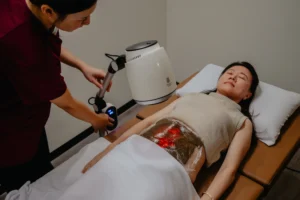
Integrative Traditional Chinese Medicine supports Western fertility protocols by enhancing pelvic micro-circulation, regulating the nervous system, and optimising the uterine environment. Modalities like Baliao Therapy, which pairs sacral acupoint stimulation with an external herbal paste, work alongside targeted acupuncture and moxibustion to clear blood stagnation, warm the uterus, and boost oxygen delivery to the uterine arteries to improve endometrial receptivity.
Over the 90 to 120 day egg maturation window, Customised Traditional Chinese Medicine internal herbal formulations nourish Kidney Jing (vital essence) and Blood to support healthy follicular growth. Additionally, these combined therapies help down-regulate stress hormones, keeping pelvic tissues relaxed and reducing uterine contractions around embryo transfer days.
Frequently Asked Questions (FAQs)
How many IVF cycles does it take to get pregnant on average?
Without preparing the body prior to IVF treatment, most couples require two to three IVF cycles to achieve a live birth. Cumulative success rates rise across sequential cycles, particularly when using frozen embryo transfers.
Is the second cycle of IVF usually more successful than the first?
Yes, second cycles frequently show improved success rates. Specialists utilise diagnostic data gathered from the initial cycle to adjust medication protocols. Furthermore, taking at least 90 days to prepare the body before starting another round of ovarian stimulation often leads to better outcomes, as this timeframe provides sufficient opportunity to improve both egg and sperm quality.
What is the maximum number of IVF cycles allowed in Singapore?
There is no regulatory limit on the total number of IVF cycles a woman can undergo in Singapore, as long as a doctor assesses that she is clinically suitable. However, government financial assistance is capped: eligible Singapore Citizen couples can receive co-funding for up to 3 fresh and 3 frozen ART cycles at public centres, subject to age and eligibility criteria.
How long should I wait between failed IVF cycles?
It is generally recommended to allow a preparation window of at least 90 days before starting another round of ovarian stimulation. Because developing oocytes require roughly three months to mature, this interval gives the ovaries time to recover, allows hormone levels to stabilise, and provides optimal time to nourish the body for a better outcome.
How can TCM help reduce the number of IVF cycles I need?
Integrative TCM focuses on improving pelvic blood flow, supporting endometrial receptivity, lowering stress hormones, and nourishing developing follicles during the 90-day pre-conception window to help create optimal conditions for implantation.
Can I undergo TCM acupuncture while taking IVF stimulation drugs?
Yes, acupuncture is safe alongside stimulation medications when administered by registered practitioners. Treatments focus on easing physical discomfort, reducing stress, and supporting blood flow to the ovaries. Oral Chinese Medicine are paused during active hormone injection phases.
Take a Proactive Step in Your Fertility Journey
Whether you are preparing for your initial cycle or seeking support after an unsuccessful transfer, our clinical team is here to walk alongside you. A personalised TCM wellness roadmap can help nourish your body, optimise egg quality, and support you throughout this preparation phase. Because when it comes to your fertility, you are never alone—Your Matter, Our Matter.