
Published on: 10 November 2026
Foods to increase male fertility are those linked in research to healthier sperm, including fish, vegetables, fruit, whole grains, nuts and legumes, while processed meat, sugary drinks, alcohol and heavily fried food are linked to poorer sperm quality. Male factors contribute to around half of couples’ fertility problems, so what a man eats matters as much as his partner’s diet. Sperm take roughly two to three months to develop, which means healthy changes need time to show.
Key Takeaways
- Fish, vegetables, fruit, whole grains, nuts, legumes and lean poultry are consistently linked to better sperm quality in research.
- Processed meat, sugary drinks, alcohol, fried food and very high caffeine intake are the main foods to avoid for male fertility.
- Mediterranean-style eating is associated with better sperm count, concentration and motility than a Western-style diet.
- Most evidence is observational, and better sperm quality does not guarantee a pregnancy, but diet is one of the factors men can change.
- Sperm take around 8 to 10 weeks to produce, so give dietary changes at least three months.
How Does Diet Affect Male Fertility?
Diet affects male fertility by influencing the health of the sperm being produced, including how many there are, how well they move and their shape. A systematic review of 35 studies found that diets rich in fish, shellfish, poultry, cereals, vegetables, fruit and low-fat dairy were linked to better semen quality, while processed meat, full-fat dairy, sugary drinks, sweets, coffee and alcohol were linked to poorer results in some studies.
These studies show associations rather than proof, and better semen results do not always mean higher chances of pregnancy. Weight matters too. A KKH fertility specialist notes on HealthXchange that sperm concentration falls by about 26% when BMI is over 25, and advises men trying to conceive to limit alcohol and stop smoking.
What Foods Support Male Fertility?

The foods most often linked to healthier sperm are whole, minimally processed and rich in healthy fats and antioxidants:
- Oily fish and seafood: salmon, sardines, mackerel and shellfish provide omega-3 fats and zinc. Men with the highest oily fish intake had higher sperm counts in one Harvard study.
- Nuts: walnuts, almonds and hazelnuts. In one trial, men who ate about 75 grams of walnuts a day for 12 weeks had better sperm vitality, movement and shape.
- Vegetables and fruit: leafy greens, tomatoes, capsicum, oranges and papaya provide folate, vitamin C and lycopene.
- Whole grains: brown rice, oats and wholemeal bread in place of refined white rice and noodles.
- Lean poultry and eggs: good sources of protein, zinc and vitamin B12.
- Legumes: lentils, chickpeas and beans provide plant protein and fibre.
- Olive oil: a healthy fat that is central to Mediterranean-style eating.
A Mediterranean-style pattern built around these foods is associated with better sperm count and movement than a Western diet high in processed meat, fries and snacks.
Male Fertility Foods to Avoid
Some foods are repeatedly linked with poorer sperm quality, so these are the main foods to avoid for male fertility while trying to conceive:
- Processed meat: sausages, ham, bacon, luncheon meat and hot dogs.
- Sugary drinks: soft drinks, bubble tea and sweetened canned drinks. In one study of young men, those drinking more than one sugary drink a day had lower sperm motility.
- Alcohol: keep to fewer than two drinks a day, or stop while trying to conceive.
- Deep-fried and fast food: often high in trans and saturated fats.
- Full-fat dairy and cheese in large amounts: low-fat options are linked to better results.
- Very high caffeine: moderate coffee is fine, but check energy drink labels, as KKH warns some contain hormones that can affect sperm.
- Large amounts of soy: moderate soy as part of a varied diet is not a concern, but very high daily intake has been linked to lower sperm concentration in one study.
Practical Male Fertility Meal Plan for Singapore
Adapting a fertility-friendly diet in Singapore does not require cooking every meal at home. Here is how to make smart swaps at local hawker centres, food courts, and coffee shops:
| Meal Time | Optimised Singapore Menu Choice | Why It Works |
|---|---|---|
| Breakfast | Rolled oats with sliced banana & walnuts + Kopi Siew Dai or Teh C Kosong | Low glycemic index, healthy fats, reduced refined sugar |
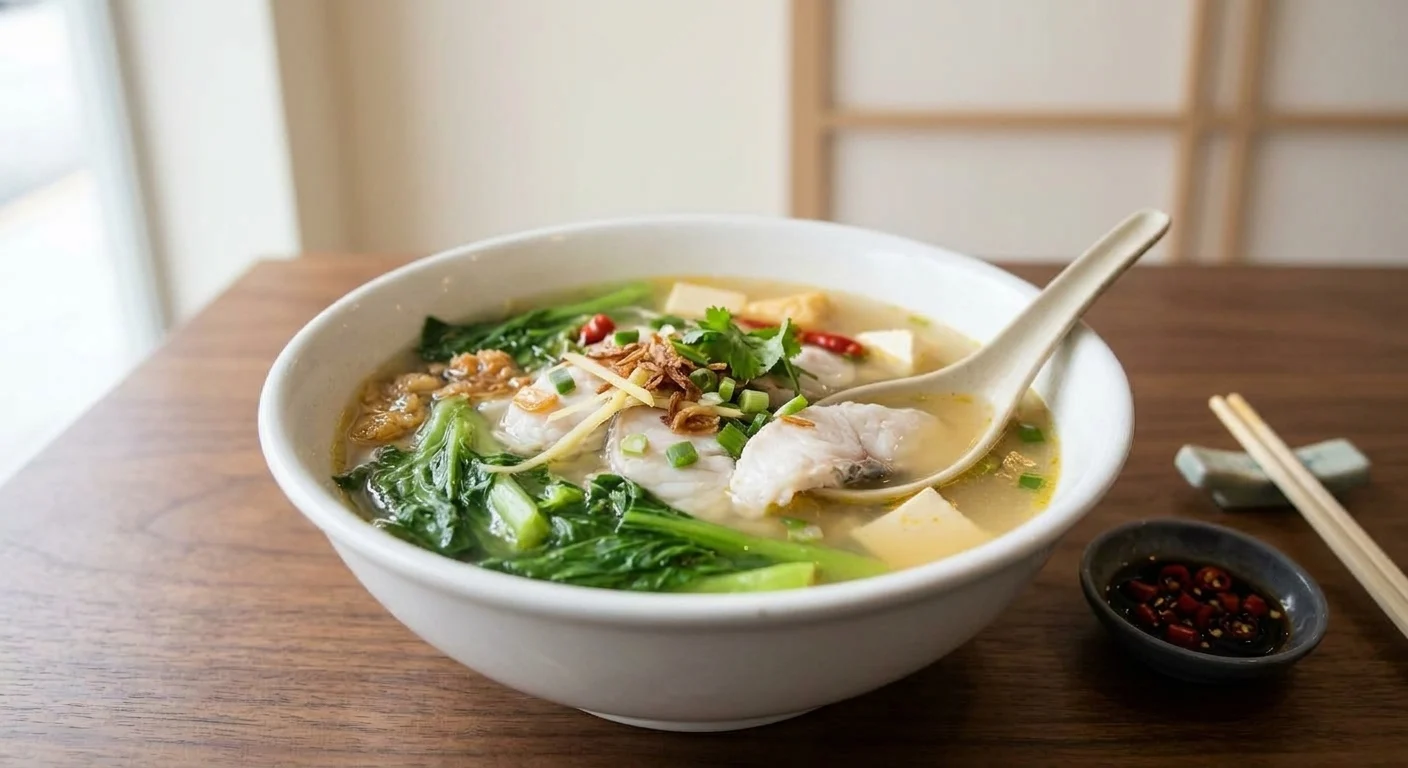
| Lunch | Sliced Fish Bee Hoon Soup (clear broth) or Brown Rice with Steamed Fish, Choy Sum, & Tomato Egg | High protein, rich in lycopene & omega-3s, low saturated fat |
| Dinner | Grilled Salmon / Baked Chicken Breast with stir-fried greens & brown rice | Packed with Zinc, B12, and antioxidants for evening repair |
| Snack | A handful of unsalted walnuts/pumpkin seeds OR fresh papaya | Rich in Folate, Vitamin C, and Kidney-tonifying fats |
The TCM Perspective on Male Fertility and Food
In TCM, male fertility is closely linked to Kidney Jing (Essence), the body’s reproductive reserve, together with a strong Spleen that turns food into Qi and Blood. Long working hours, late nights, stress, heavy drinking and greasy or spicy food are believed to drain Jing or create Damp-Heat, which TCM associates with poorer sperm health.
TCM food therapy therefore favours warm, cooked meals, black foods such as black sesame and black beans, walnuts, seafood and plenty of vegetables, while limiting alcohol, deep-fried food and very spicy dishes. A TCM physician tailors these choices to your pattern after a full assessment. For TCM treatment options beyond food, including acupuncture and herbal therapy, see our guide on how to improve sperm quality. Our page on azoospermia covers men with no sperm in their semen.
Frequently Asked Questions
How long does it take for diet to improve sperm?
Sperm take around 8 to 10 weeks to develop, so most doctors suggest keeping dietary changes for at least three months before expecting any difference in a semen test.
Does soy lower sperm count?
Moderate soy, such as tofu or soya milk a few times a week, is not considered a concern. Very high daily intake has been linked to lower sperm concentration in one study, so variety is the safest approach.
When should a man see a doctor about fertility?
KKH advises couples to see a fertility specialist after a year of regular trying without success, or sooner if either partner is over 35. A semen analysis is a simple first test for men.
Why Choose Wo.men Matters
Fertility is a shared journey, and support works best when both partners are looked after. At Wo.men Matters, our TCM physicians offer personalised TCM programmes for male reproductive wellbeing, reviewing semen results and health history alongside a full Traditional Chinese Medicine assessment, and fitting advice around your modern medical care.
Our bilingual team is here to make sure every step is clearly explained and easy to follow. Connect with our team to find out how a tailored approach can support you both. Your matter, our matter.